Africa is home to rich natural resources, diverse cultural wisdom, and vibrant environments with roots in the indigenous education system, possessing the potential to redefine early learning across the continent. However, these assets have only been partially utilized to benefit and inform early education practices. But this is changing! A surge of awareness is recognizing the critical link between indigenous knowledge, local materials, and sustainable educational practices. The Gaffat Community Preschool project in Debre Tabor, Ethiopia, exemplifies this shift, offering a window into the promising future of early childhood education in Ethiopia, the continent, and beyond.
Indigenous Architectural Design
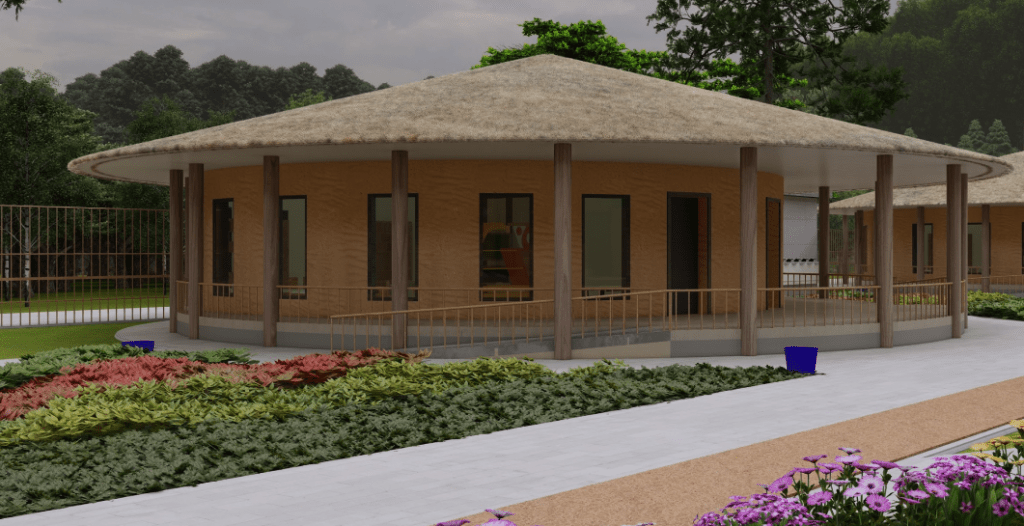
The Gojo Bet is a distinct structure recognized by its cone-shaped top and circular bottom. It is a significant cultural symbol for African communities and other indigenous groups worldwide. Apart from its physical features, the Gojo Bet represents a collective thought and approach that reflects the socio-cultural identity of its locals. Unlike conventional buildings, the Gojo Bet does not separate its areas into compartments. Instead, various sections are openly displayed as cooking areas, rest areas, and other parts that make a house feel like a home. This architectural layout reflects a communal ethos, celebrating shared spaces and interconnectedness within immediate, extended families and society.
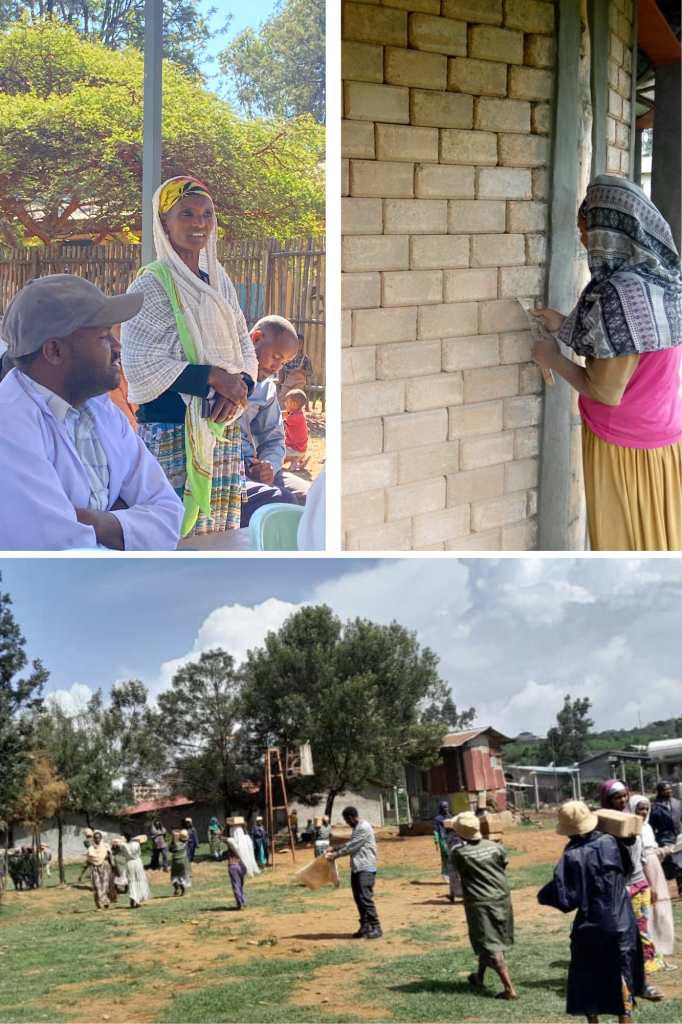
The construction of traditional Gojo Bet walls is bound by tradition and passed down through generations. Locals use a combination of natural elements in the surrounding environment to create a durable, well-insulated structure that is in harmony with nature. Even though this practice has been considered “primitive” for a long time, it is now being revitalized through various projects, bringing new life to the profound indigenous knowledge embedded in the construction of traditional Gojo Bet.
Collaboration
If we were asked what made the first construction phase successful, it would be our collaboration with key organizations. The Institute for Sustainable Infrastructure‘s support and guidance go above and beyond; their impact is evident in the tangible outcomes observed with ECEE’s preschool construction. This collaboration has disseminated innovative ideas to local engineers, construction workers, and the education bureau, emphasizing the collective responsibility in building sustainable early learning programs. It urges a departure from the conventional approach of simply piling bricks one by one to put children in a concrete or makeshift building. It challenges the status quo; rather than being outcome-oriented, it is broadly invested in the process. Asking the most valuable question of “why” every step of the way. For Early Childhood Education Ethiopia, this aligns with our mission and vision, amplifying our commitment to expand our resources while advancing daily environmental stewardship.
The Community Leading the Change
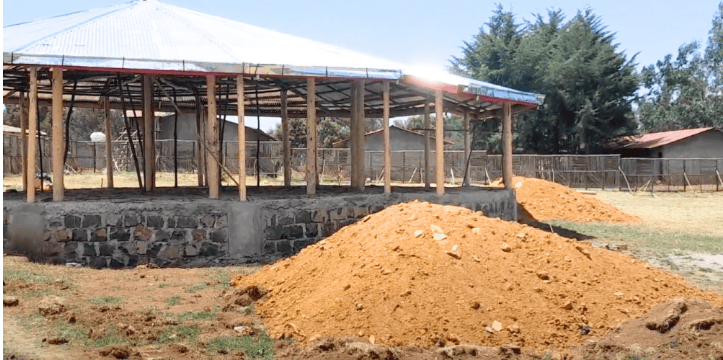
Early Childhood Education Ethiopia is based on community-led practices. As an organization, we invest in, work with, and employ individuals within the community to bring this monumental project to life. We hired a local contractor, provided temporary jobs for several community members, and opened the lines of communication widely while adopting an equity-minded practice. This resulted in the delivery of the first construction phase (two classrooms and one restroom) on schedule. We held community practice meetings, exchanging ideas between organizations and local community leaders, enriching the collective knowledge base. By learning from one another and collaborating, we can better apply existing indigenous knowledge and sustainable practices in different contexts, creating a holistic ecosystem that benefits children and early education advancement.
What’s Next for ECEE
What’s Next for ECEE
In February, ECEE plans to move into the second construction phase. This phase will involve adding four more Gojo Bet classrooms and two restrooms with 16 stalls. The local community’s collaborative engagement, support, combined traditional knowledge, and technical proficiency continue to lead ECEE’s community preschool project, scheduled to serve 450 children 3-7 years old. Gaffat Elementary School, Debre Tabor University, and the local education bureau partners are critical in this monumental effort. Their continued support adds to the community-driven dimension of ECEE’s initiative, emphasizing the shared commitment to establishing a sustainable early education program that benefits the broader rural community of Debre Tabor and beyond.
What can you do?
Support this effort by donating to this initiative; let’s prioritize children.
Last year, Early Childhood Education Ethiopia started building a community preschool in Debre Tabor, Ethiopia to serve 450 children ages 3-7 years old. Currently, more age-eligible children are out of preschool than in school in Ethiopia. Often, when the opportunity to attend an early learning program is available, children face overcrowded preschool classrooms with a ratio of 1 teacher to 100 children, lacking essential instructional resources or amenities for teachers and students.
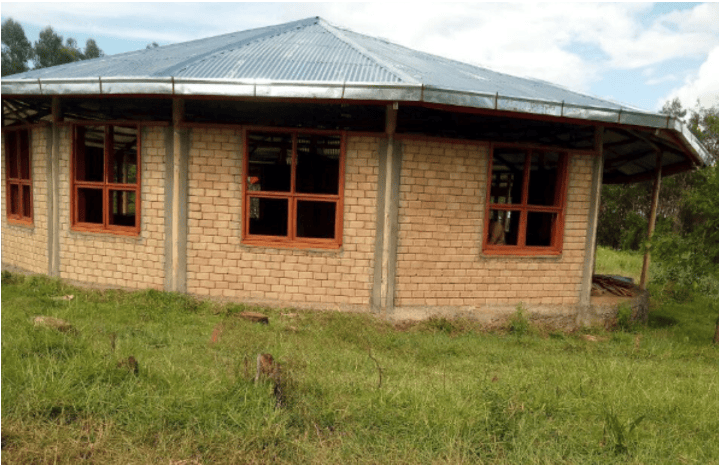
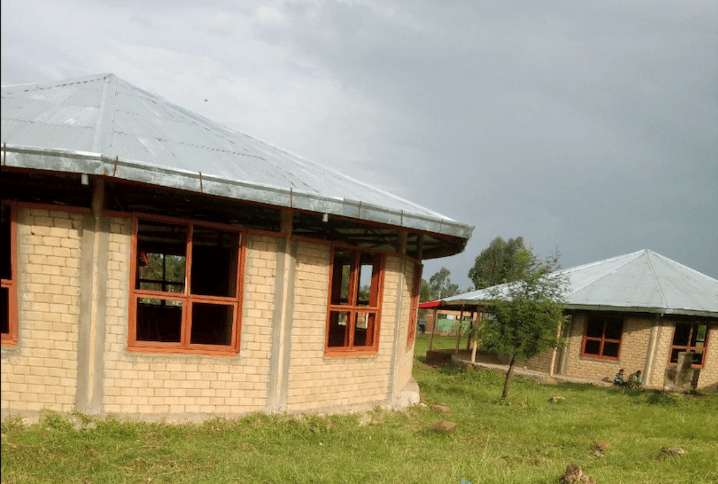
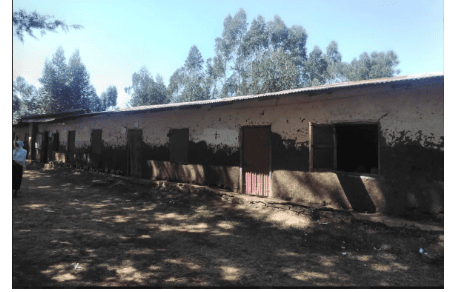
Current Gaffat Preschool
Early Childhood Education Ethiopia’s (ECEE) mission is to provide high-quality, developmentally appropriate early learning programs in unserved and underserved rural communities throughout Ethiopia. Understanding children’s social, emotional, linguistic, and cognitive development are molded through reciprocal interactions as they engage with those in their environment during the early years, specifically between the ages of birth to 6, the organization has prioritized and integrated the community’s cultural wealth in every aspect, from current construction typology to future curricular and instructional activities.
Local Community Partnership
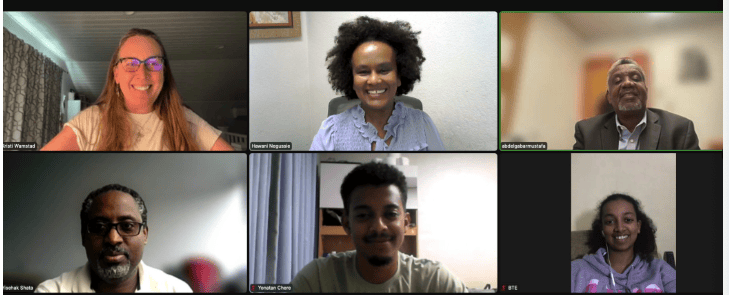
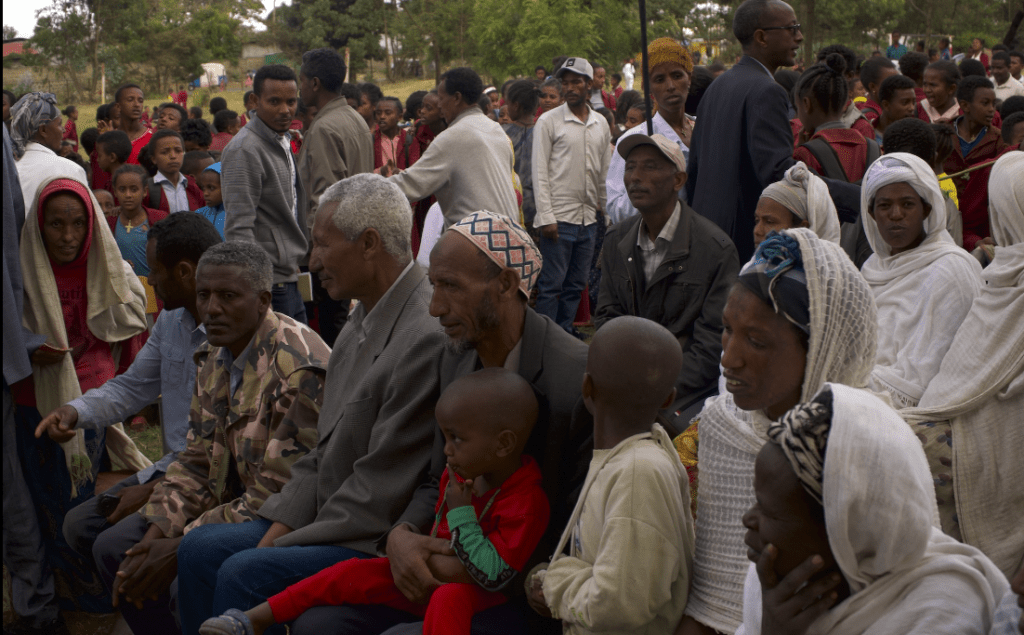
For several years now, members of the ECEE team in partnership with Debre Tabor University‘s faculty members, Dr. Abraham Melkie and Ato Getachew Walelign, along with community representatives, elders, school administrators, teachers, and parents have been in several virtual and in-person meetings
Ato Mulualem (Gaffat Elementary Principal) and community members
discussions, and dialogues to fully incorporate the local voice in not only the school building but any reforms suggested by ECEE. It is the organization’s foundational belief that those most affected by the challenge are bearers of the soundest solutions.
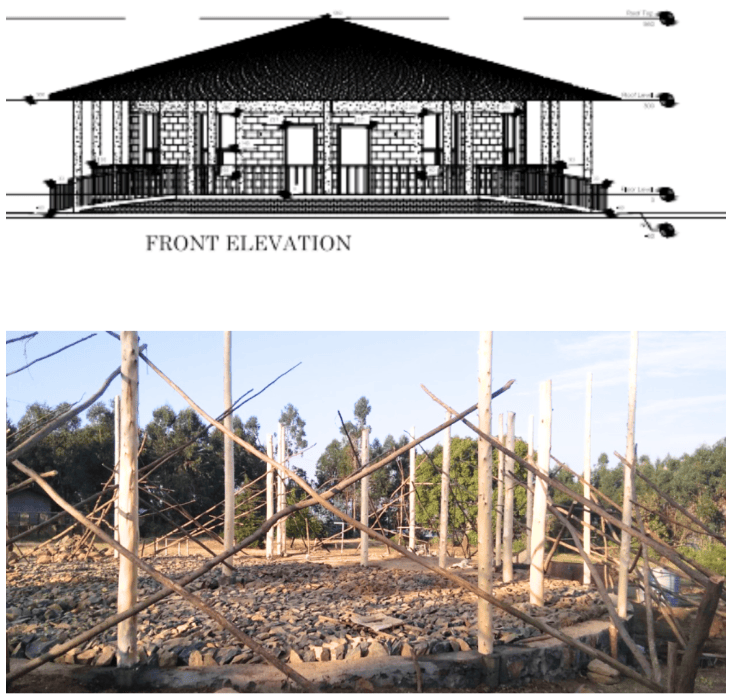
The Architects behind Gaffat Community Preschool
Preschool Construction Site
It was important for ECEE to employ local talent and showcase to the world how much the youth in Africa has to offer when given the opportunity and trust in their knowledge. Betelhem T. Eshete and Yonatan C. Enawgaw, are two exceptionally talented young architects who brought the Gojo Bet design celebrating Ethiopia’s traditional housing system found spread across rural Ethiopia to existence. Leveraging their education, experience, and knowledge of indigenous resources, including architectural innovation, they continue to advance and advocate for sustainable solutions in both material selection and technology while incorporating indoor and outdoor play-based spaces in their design strategies. Yisehak Shata, PE, from our partners at STEM Synergy has been an instrumental supporter and counsel on all efforts related to construction and specifically broadening our early conceptual framework regarding sustainability, one that has the potential to change how early childhood construction moves forward in the context of Ethiopia.
ECEE’s Gaffat Community Preschool is shaping up to change the landscape of how we educate and provide access to young children coming from underserved communities in rural areas. Through a systems approach, that includes a PK-16 model, the organization’s effort will meet the immediate and long-term needs of children while reducing the number of children out of preschool in Ethiopia.
The first five years of life are foundational to human development. During these early formative years, children gain knowledge through cumulative experiences as they engage with others in their surroundings. Children at this stage of development depend on their caregivers such as fathers, mothers, grandparents, and other family members to nurture them, and respond to their social-emotional, physical, and cognitive needs while the environment plays an equal role in enhancing and translating these early experiences into short & longterm knowledge. High-quality, caring, responsive, happy, and playful beginnings provide the infrastructure for whom we become for the rest of our lives.
But for many children in Ethiopia, their early start is challenged by social and environmental inequities. The majority of children under five come from unserved or underserved communities. Early trauma and severe neglect during these years create barriers to learning which is highly dependent on meaningful relationships and trust with others. An unhealthy start for many children also means a lifelong struggle to become a successful and contributing member of the larger society. But as a country, we can change the outcome for many children by investing holistically in the first five years. Early Childhood Education Ethiopia, an organization with a mission and vision to improve, advance, expand and prioritize early childhood care and education in rural Ethiopia is advocating for the following four initiatives to move toward meeting the children’s agenda in Ethiopia.
Increase Social Services
Children need unhindered care and support during their early years. Increasing social services that provide assistance to both the child and the family is a critical first step. As an integral part of the social system, schools especially early education programs in conjunction with hospitals, and public assistance agencies should be readily available and in abundance to meet the demands of the population. The concentration of such services should be prioritized first in rural areas where most of the population resides, and then cascade down to the cities.
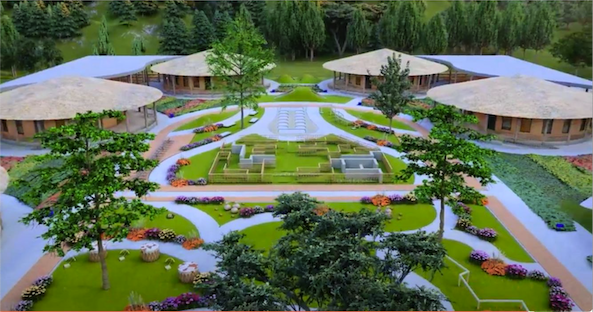
Future Gaffat Community Preschool, Debre Tabor, Ethiopia
Close the Equity Gap
Families that fall under the poverty line and those that come from the underserved community make up more than 70% of the population. Most live in rural or less industrialized areas throughout the country. For families, closing the equity gap means comprehensive support that upends one’s ability to gain financial growth, achieve self-reliance, and have access to social services that secure personal health and generational wealth. One way to close the equity gap is to afford all children the right to attend high-quality early learning programs near their communities in close proximity to their dwellings. High-quality programs begin with investing in early childhood teachers’ education, pay parity, and continued professional development.
Shimmbit KG Classroom, Bahir Dar, Ethiopia
Empower Parents
Early Childhood Education Ethiopia’s guiding principle #4 states, “We believe parents are navigational experts, problem solvers, astute communicators, negotiators, and equal contributors to their children’s education”. As an organization, we stand fully by this statement. As such, we should invite parents to every table for input, to inform policy and co-direct practice. Integrating their voice as the driver for change should be collectively embraced at the local, national, and global platforms. We are advocating that in any decision made regarding children, parents’ engagement as equal partners must be embraced, valued, and integrated into both policy and practice.
ECEE Community Meeting w/Parent
Strengthen Rural Communities
Approximately 70% of Ethiopia’s population lives in rural areas. These communities offer a wealth of knowledge and cultural resources but the inclusion of who they are and what they bring has been absent from early education reforms. Early Childhood Education Ethiopia believes it is when we strengthen rural communities we gain measurable achievement in amplifying children’s agenda throughout Ethiopia and elsewhere. It is because of this foundational belief that Early Childhood Education Ethiopia is building the first community preschool in Debre Tabor, Ethiopia.
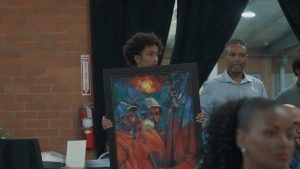
Thank you to all our supporters, friends, family members, and donors who made the first fundraiser gala on September 17, a success! It is through your generosity that we get closer to our goal and realize our vision of putting more children in high-quality preschools throughout Ethiopia. Children in rural Ethiopia face compounding challenges brought on by inequitable opportunities, but together we can change that by providing access to early learning programs, nutrition, play-based activities, and meaningful partner engagement opportunities. We are grateful you have joined us on this monumental journey, thank you!
Sister Meheret Kanna
2022 Children Champions Award Recipient
Sister Meheret Kanna’s commitment to the well-being of children and women, specifically her contribution to child and maternal health among her countless efforts to improve systems throughout Ethiopia will be forever treasured by the country she loves and served, Ethiopia. Her career span several decades holding key positions including the first female president of the Red Cross, Matron at ALERT Hospital, Head Nurse of Tena Tibeka, Head of the Public Health College which is now the University of Gondar, and Children Health and Nutritionist coordinator during the famine in the mid-’80s. Her commitment to excellence in all that she Early Childhood Education Ethiopia is honored to give the first Children Champions Award to Sister Meheret Kanna.
Courage, Perseverance, Dedication, Passion!
Running for the Cause- Iyob Tessema
Iyob Tessema is widely known for the record-breaking marathons he has successfully completed and for several awards and recognition he has received from notable organizations in the health and fitness industry. But more than that, he is passionate and committed to supporting organizations that improve the lives of others, especially those working with children. This year, Iyob’s passion has led him to Early Childhood Education Ethiopia where he will run to raise awareness and funds. We are grateful and sincerely appreciate Iyob’s championing the work ECEE is engaged in. This collaboration amplifies the need to realize the mission to bring high-quality early learning programs to rural Ethiopia. Join us in supporting Iyob at the Boston Marathon next April. You can read more by visiting: https://laenduranceconsulting.org/about
“The future is designed by what we do for children today” ECEE. Let’s invest in high quality early learning programs in rural Ethiopia. Support our efforts in reducing the number of children out of preschool.
Children enter this world seeking love, comfort, understanding, and empathy. They hope and expect that when they cry, their parents or caregivers will feel their distress and respond to their needs. Babies are profoundly attuned to this reciprocal relationship, they thrive and grow using these early interactions to build their own emotional framework. Around age three, as children begin to interact with the wider ecological system from an advanced level of development, (communication, mobility, coordination, and attention span), we see a shift in the way they perceive and understand their own identity in the larger context of their surroundings.
Empathy and Kindness
Empathy relates to one’s ability to notice, share, understand, and take into account how others feel. For young children who are just beginning to comprehend the complexity of emotions, this can take some time to integrate, process, and apply. Kindness for children means being included, sharing toys/space, witnessing generosity, and being considerate to others. Children at this age are socially and emotionally well equipped to understand when someone wants to be part of their world, and that allowance is reciprocated. Like empathy, this skill also requires time, modeling, and lots of practice. For some children, reacting when someone is sad, and what to do when friends get hurt have been exemplified by parents, caregivers, and teachers since birth. Children who have been afforded multiple opportunities to see what kindness looks like, feel, and displayed between people in their environment, may find it easy to emulate those feelings with peers and siblings. But many children struggle with recognizing how others feel or finding the best way to help, therefore showing kindness might be challenging.
But there is a lot we can do to support children to strengthen these skills.
Ways to Promote
Model the way by letting your child see you in an act of kindness.
Highlight situations where someone is showing empathy to others, use words that capture what that means, and use facial gestures to help children understand what is better.
If you see unkind interactions, let your child know how that feels to others, so they can work more on being kind and empathetic rather than unkind.
Build their language skills by introducing and describing many different ways to say kind, generous, empathetic, and considerate.
Use affirmations when you see your child doing something kind, hug them, show affection, play with them, and when they ask why-describe what you saw them doing.
Avoid giving treats or toys for showing kindness or empathy towards others as that will diminish the intrinsic motivation to engage in such acts.
Let them see you make mistakes. If you are unkind, help them see how to correct such behavior so they can see that it takes time to develop skills that last well into adulthood.
Empathy and kindness are critical skills for human development. We can start showing children what empathy and acts of kindness mean beginning at birth and building on these skills during the early childhood period.
A central belief of Early Childhood Education Ethiopia is concerned with providing children the space, time, and encouragement to exercise their imagination. Children are interested and invested in their surroundings. They explore, test, challenge, and discover all the wonders in their immediate environment at first, and use these early experiences to build, venture out and gain advanced knowledge systems from a structured learning environment in primary grades. While play remains the most effective tool for all the domains of development, the environment which includes, teachers, peers, and other adults influence how children engage in imaginative play. Children’s involvement with the natural world is unique, they find everyday items overlooked by adults to build, mix, make noise and create. A worm slithering on the ground leaving prints from its movement ignites the young mind to ask, how can a small animal leave such a trail behind?
Children at Shimmbit preschool program in Bahir Dar, Ethiopia Allowing, encouraging, and celebrating children’s use of their outside environment to explore, is the beginning of the scientific inquiry. Sticks become small infrastructure, representing a bridge they crossed or saw in a book, lending themselves for future aspirations. Looking at ants marching in a uniformed line serves as the genesis for railway or structural engineers. Collaboration, listening to what friends say and how they add to the product, including finding out what makes the design work or break, allows children to test how things operate in their world. Learning is a continuous attempt of trials and errors. A hands-on experience where the child is actively contributing to her or his learning serves as the most productive medium for retaining knowledge. Group of children playing with sticks found in the yard
What can teachers, parents, and community members do?
Learning happens everywhere, every day, and every minute for the growing child. As previously mentioned interacting with nature, spending time outside, and allowing children to explore the environment serves as the building blocks for lifelong learning. Parents interested in children’s creations add immeasurable value to children’s curiosity and learning. Invite children to explain their thinking, and share how you played as a child, emphasizing its similarity of differences. Join them in their play without judging or minimizing their efforts. Teachers, and fellow children’s interests, add to it and become learners of students’ patterns of inquiry and exploration. Show genuine joy in their play by engaging, observing, and integrating it into the curriculum.
“Creativity is Intelligence Having Fun” Albert Einstein